Selling on the OBI Marketplace: Seller Guide 2026
The OBI marketplace gives merchants access to a well-known brand and a clearly defined audience interested in DIY, building, gardening and home furnishings. Unlike marketplaces that are open to anyone, OBI checks in advance whether a company and its product range are a good fit for its own offering. This guide explains the requirements, costs and sales processes and shows how to make OBI a targeted part of your multichannel selling.
Fact-checked on October 30, 2026 · Editorial team: magnalister
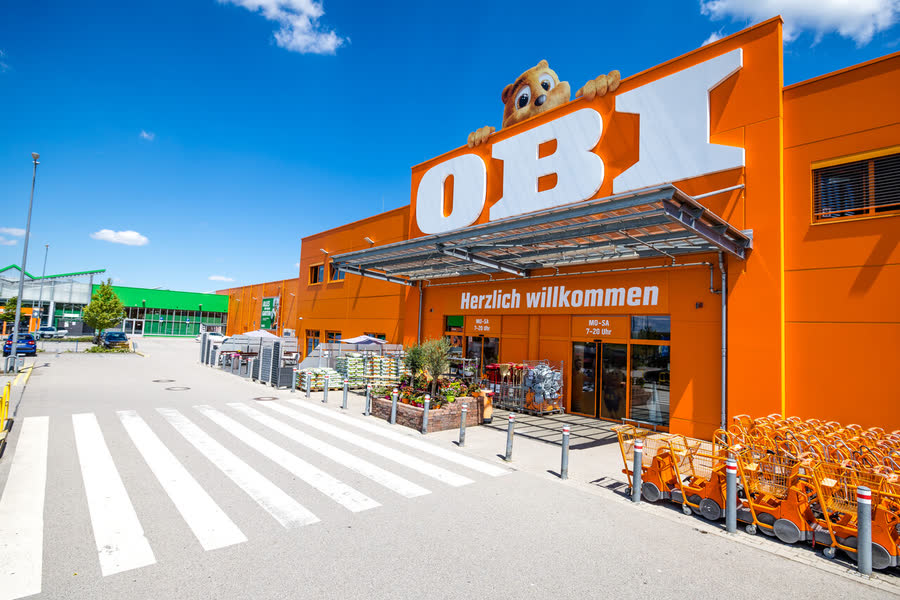
OBI marketplace: key takeaways
- Specialized reach: OBI combines an established DIY brand with a deliberately expanded online range for Germany and Austria.
- Vetted access: Commercial manufacturers and merchants with a suitable product range, a registered office in the EU and goods shipped from within the EU can apply.
- Individual terms: OBI negotiates selling fees individually with its Product Partners and discloses the specific contract rates during onboarding.
- Seller-managed order handling: Product Partners take care of invoicing, shipping, returns and the legal obligations for their listings.
- Multichannel selling: As an official OBI integration partner, magnalister connects the marketplace to your shop system and synchronizes product, price, inventory, order and shipping data.
Table of Contents
Overview of the OBI marketplace
What is the OBI marketplace?
The OBI marketplace expands OBI’s online offering with products from selected manufacturers and merchants in DIY, building, gardening and home furnishings. For its German online shop alone, the company cites more than 230 million visitors a year. 1
Since June 1, 2026, the marketplace has also been available in Austria. The expansion underlines its growing importance: Michael Maihaus, Vice President Global Digital Business at OBI, calls it “a central pillar of growth for OBI in the coming years” (translated from German). 2
How does the OBI marketplace work?
On the OBI marketplace, approved Product Partners sell their products directly to customers within OBI’s online shop. OBI provides the sales platform and access to its existing customer base, while merchants act in their own name and handle orders, invoices, shipping and returns. 3
Before listings go live, OBI reviews the company and its product range. Alongside Product Partnering, OBI distinguishes between Local and Solution Partnering: Local Partners provide services on site, while Solution Partners offer complete solutions including needs analysis, consultation, installation and maintenance. 4
Listing products on the OBI marketplace
Which products are suitable for the OBI marketplace?
Suitable products have a clear connection to DIY, building, gardening or home furnishings and are a meaningful addition to OBI’s existing range. OBI assesses how well a range fits as part of the seller application. 1
Typical product categories include:
- Tools and building materials: hand tools, power tools, fasteners and construction materials
- Garden and leisure: gardening supplies, plant accessories, play equipment, garden sheds and outdoor products
- Bathroom, kitchen and heating: faucets, bathroom fixtures, kitchen accessories and heating technology
- Home furnishings and smart home: furniture, home accessories, lighting and connected home technology
The online marketplace is also attractive for bulky products, products with many variants and products that need explaining, which would take up a lot of sales space in OBI’s brick-and-mortar stores. OBI cites play equipment, garden sheds and photovoltaic solutions, among others, as examples. 2
What product data do merchants need for the OBI marketplace?
For new products, OBI requires a GTIN and complete German-language product information in line with the applicable content guidelines. This includes clear titles and descriptions, category-specific attributes, product images, manufacturer and safety information, as well as weight, dimensions and delivery method. 1
What legal requirements apply to products on the OBI marketplace?
Merchants selling on OBI must meet the product and labeling requirements of each country they sell in. For typical DIY store ranges, the following areas are particularly relevant:
- Product safety: Online listings must include manufacturer details, the responsible person in the EU where applicable, and the required warnings and safety information 5.
- Packaging: Since August 12, 2026, the EU Packaging and Packaging Waste Regulation (PPWR) and the German Packaging Law Implementation Act (VerpackDG) have been in force. For affected deliveries to Germany, two requirements in particular still apply: registration in the LUCID packaging register and participation in a dual system, i.e. a packaging compliance scheme 6.
- Electrical equipment: Depending on the merchant’s role, registration, information and take-back obligations under the German Electrical and Electronic Equipment Act (ElektroG) apply 7.
- Batteries and rechargeables: German battery law (BattDG) governs registration, take-back and customer information, among other things 8.
Costs and margin calculation on the OBI marketplace
What fees does the OBI marketplace charge?
OBI negotiates the specific selling fees individually with its Product Partners. Merchants receive the applicable terms and contract rates as part of onboarding.
Your overall calculation should also include shipping, packaging, returns, handling forwarded customer inquiries, advertising and the technical integration. For bulky items, freight shipping and potential return transport carry particular weight.
How do merchants calculate their margin on the OBI marketplace?
The contribution margin is net revenue minus the cost of goods sold, OBI fees and other sales-related costs. The following example assumes €100 in net revenue and full input VAT deduction. It also factors in a returns reserve and pay-per-click advertising via OBI Sponsored Products. The individually agreed OBI selling fees are then deducted from the subtotal.
| Item | Example value or calculation |
|---|---|
| Net revenue | €100.00 |
| Cost of goods sold | − €45.00 |
| Shipping and packaging | − €9.00 |
| Returns reserve (assumption) | − €4.00 |
| Sponsored Products (assumption) | − €3.00 |
| Subtotal before OBI fees | €39.00 |
| Individually agreed OBI selling fees | − applicable contract rate |
| Contribution margin | €39.00 minus OBI selling fees |
Opportunities and limitations of the OBI marketplace
What are the advantages of the OBI marketplace?
For suitable DIY ranges, the OBI marketplace combines a specialized audience with a curated sales environment. This results in the following advantages:
- High brand awareness: OBI reports aided brand awareness of 95% in Germany 1.
- Specialized reach: Merchants reach customers who are specifically looking for products for the home, garden, building and DIY.
- Connected sales channels: Customers can access listings on the OBI marketplace platform online, through the heyOBI app and with the help of advisors in participating OBI stores 3.
- Curated platform: OBI vets merchants and product ranges before activation and aligns the offering with its own market environment.
- Two country markets: Product Partners can apply for Germany and Austria.
- Transparent ranking factors: OBI discloses which product and performance data influence organic visibility.
What are the disadvantages of selling on the OBI marketplace?
The vetted access and the operational responsibility of Product Partners come with several limitations:
- Approval process: OBI decides on admission after reviewing the company and its product range.
- Individual terms: OBI does not publish a general fee schedule; merchants learn the applicable contract rates during onboarding.
- Competition with OBI’s own offers: In addition to external Product Partners, OBI group companies also sell on the marketplace platform 3.
- Seller-managed order handling: Product Partners handle orders, invoices, shipping and returns themselves.
Which merchants is the OBI marketplace a good fit for?
The OBI marketplace is particularly well suited to professional manufacturers and merchants with a DIY-related range, sufficient margins, structured product data and reliable parcel or freight logistics. Bulky, variant-rich and innovative products can benefit from the expanded online range.
The marketplace is less suitable for low-margin products with high shipping or return costs, and for merchants who cannot reliably manage product data, order handling and forwarded customer inquiries.
Applying and getting started on the OBI marketplace
What are the requirements for OBI Product Partners?
To apply as an OBI Product Partner, merchants need a registered business. OBI also lists the following requirements:
- Registered office in the EU
- Goods shipped from within the EU
- German-language customer service
- Product range available online with a connection to DIY, building or gardening
OBI does not require any mandatory document uploads for the initial registration. Even so, it makes sense to provide a product catalog, a company presentation or a commercial register extract, as these help OBI classify the company and its range. Once accepted, merchants go through the payment service provider’s identity verification (KYC), which may require proof of identity and bank details, among other things. 1
How does registration on the OBI marketplace work?
Registration covers the application, company review, contract signing, technical setup and product approval. The process is divided into five steps:
- Submit your application: You provide your company details, a contact person and information about your product range.
- Review by OBI: OBI’s partner management team assesses your company and how well your range fits.
- Complete contracts and KYC: You sign the required agreements and go through identity verification.
- Set up the partner platform: You enter your company and shipping settings and choose between the REST API, manual CSV upload or a connected software partner.
- Activate your products: You map categories and attributes, transfer your product data and submit your listings for review. 1
Order processing and logistics on the OBI marketplace
Who handles shipping and returns on the OBI marketplace?
Shipping, invoicing and returns are the responsibility of each Product Partner. OBI provides first-level customer service for questions about orders, payments and complaints and forwards cases it cannot fully resolve to the merchant. As the seller, the Product Partner remains responsible for contract fulfillment, withdrawals, warranty claims and refunds. 3
After the sale, merchants therefore need end-to-end processes for order intake, invoicing, shipping confirmation and returns processing. Delivery times and stock levels should reflect what can actually be fulfilled. Complete shipping communication also includes the carrier used, available shipment tracking and clear information on how to return items.
What should merchants consider for parcel and freight shipping on the OBI marketplace?
On the OBI marketplace, the shipping method should already be defined at product level. For parcel-ready goods, dimensions, weight, shipping costs and tracking are the key factors. For bulky items, freight transit times, delivery scheduling, the actual handover at the delivery location and processes for damaged shipments and return transport also come into play.
Especially with garden sheds, play equipment or other bulky products, outbound and return transport can eat up a considerable share of the margin. So calculate both shipping directions, packaging and any additional services for each product group. Realistic delivery windows and up-to-date, synchronized stock levels prevent logistically demanding ranges from producing late or unfulfillable orders.
Visibility and advertising on the OBI marketplace

How can merchants improve the visibility of their listings on the OBI marketplace?
Organic visibility depends mainly on how well search terms, product titles and the stored attributes match. In the default sort order “Beliebteste” (most popular), OBI also takes into account a product’s past performance for the search term in question, sales, views, ratings, add-to-cart interactions and availability. Filters such as brand, color or dimensions also influence how products are displayed. 9
This results in five concrete optimization levers:
- Product titles: include key search terms and distinctive product features
- Attributes: map all relevant characteristics completely and correctly
- Variants: structure dimensions, colors and technical versions clearly
- Stock levels: keep availability and delivery information up to date
- Reviews: analyze recurring criticism and improve product quality
How do Sponsored Products work on the OBI marketplace?
With Sponsored Product Advertisements, or Sponsored Products for short, merchants can promote selected items in OBI’s online shop and the heyOBI app. These labeled ads are billed per click and can be placed ahead of the organic results in ranking positions 1 and 2.
Whether an ad is shown is determined by a quality score based on the maximum cost-per-click bid, historical click-through rate and search relevance. Campaigns are therefore best suited to in-stock products with complete data and sufficient margin. 9
OBI in multichannel selling with magnalister
With OBI, merchants add a specialized sales channel for DIY ranges to their multichannel selling. However, every additional marketplace increases the effort required to maintain product data, stock levels and orders. The magnalister multichannel integration synchronizes this data centrally with your own shop system, reducing manual work, overselling and inconsistent product information. 10
How does magnalister connect the OBI marketplace to shop systems?
OBI lists magnalister as an official integration partner for its marketplace. The integration connects OBI to supported shop systems, including Shopify, Shopware, WooCommerce and Adobe Commerce (Magento 2). This lets you manage product, order and shipping data centrally from your shop back end. 1
The core features of magnalister’s OBI integration include:
- Product upload: prepare, categorize and publish products from your online shop for OBI
- Attribute matching: map characteristics from your shop system to the product attributes OBI requires
- Price and inventory synchronization: automatically sync changes between your shop system and OBI
- Order import: pull OBI orders into your usual order management
- Shipping processing: report shipping status and tracking information back to OBI
Through the same interface, you can connect other marketplaces such as Amazon, eBay, OTTO or Temu and manage your sales channels centrally from your shop back end. According to an internal Amazon communication, the magnalister application was selected in 2026 as a “Best-in-Class Solution Provider’s Application” among European integrators.
Conclusion: a curated sales channel for DIY retail
The OBI marketplace expands the home improvement brand’s digital range with offers from selected manufacturers and merchants in Germany and Austria. Vetted access, a specialized audience and transparent ranking factors define the platform, while Product Partners are responsible for invoicing, shipping and returns themselves and handle forwarded customer inquiries.
For professional merchants with a suitable range, complete product data and reliable logistics, OBI can be a targeted addition to their existing multichannel selling. A realistic margin calculation and centrally managed sales processes lay the foundation for running the additional channel profitably over the long term.
TRY MAGNALISTER FREE FOR 30 DAYS
More seller guides for multichannel selling
If you want to open up other sales channels in addition to OBI, you’ll find the right guides here:
FAQ: common questions about the OBI marketplace
Can private individuals sell on the OBI marketplace?
No. OBI is aimed at commercial manufacturers and merchants with a registered office in the EU and goods shipped from within the EU. Companies and their product ranges are reviewed before being accepted as Product Partners.
How much does it cost to sell on the OBI marketplace?
OBI negotiates the specific selling fees individually with its Product Partners. Merchants receive the applicable terms and contract rates during onboarding. Shipping, packaging, returns, advertising and the technical integration also belong in your calculation.
Which products can merchants sell on the OBI marketplace?
OBI accepts products related to DIY, building, gardening and home furnishings that are a meaningful addition to its existing range. OBI reviews the company and its range before activation. New products also need a GTIN and complete German-language product information.
Does OBI handle shipping and returns?
No. Product Partners handle invoicing, shipping and returns themselves. OBI provides first-level customer service and forwards unresolved cases to the merchant in question. Withdrawals, warranty claims and refunds remain the Product Partner’s responsibility.
In which countries can I sell through the OBI marketplace?
The OBI marketplace is available in Germany and Austria. Since June 1, 2026, Product Partners have also been able to apply for the Austrian market. Prices, delivery times, shipping costs and return processes should be planned separately for each target market.
Which factors influence rankings on the OBI marketplace?
The most important factors are how well the search term, product title and attributes match and the product’s past performance. OBI also takes sales, views, ratings, add-to-cart interactions and availability into account. Complete product data and up-to-date stock levels therefore give you a better starting point for organic visibility.
Which shop systems can I connect to the OBI marketplace?
With magnalister, you can connect the OBI marketplace to Shopify, Shopware, WooCommerce and Adobe Commerce (Magento 2), among others. The integration transfers product data, synchronizes prices and stock levels, imports orders and reports shipping information back to OBI. This allows merchants to manage recurring processes centrally from their shop back end.
- 1 OBI: “Partner werden bei OBI”, reach, requirements, application process, product data, technical connection options and integration partners (in German), accessed October 30, 2026, https://partner.obi.de/ ↩︎1.a, ↩︎1.b, ↩︎1.c, ↩︎1.d, ↩︎1.e, ↩︎1.f, ↩︎1.g
- 2 OBI Austria: “Noch mehr Auswahl für Haus & Garten: OBI bringt seinen Online-Marktplatz nach Österreich”, June 1, 2026, launch, positioning and product range examples of the Austrian OBI marketplace (in German), accessed October 30, 2026, https://www.obi.at/corporate/presse/pmonlinemarktplatzat ↩︎2.a, ↩︎2.b
- 3 OBI Home and Garden GmbH: “Allgemeine Nutzungsbedingungen für die OBI-Handelsplattform”, OBI’s role as intermediary, first-level customer service, cross-channel availability and sellers’ responsibility for contract fulfillment, withdrawals, warranty claims and refunds (in German), accessed October 30, 2026, https://www.obi.de/legal/agb ↩︎3.a, ↩︎3.b, ↩︎3.c, ↩︎3.d
- 4 OBI: “OBI Strategy”, positioning of the curated marketplace and the difference between Product, Local and Solution Partnering, accessed October 30, 2026, https://www.obi.de/corporate/en/strategy ↩︎
- 5 European Union: “Regulation (EU) 2023/988 on general product safety”, product and safety information and obligations for online listings, accessed October 30, 2026, https://eur-lex.europa.eu/eli/reg/2023/988/oj/eng ↩︎
- 6 Zentrale Stelle Verpackungsregister: “PPWR & VerpackDG: This has been in force since 12 August 2026”, current packaging law, LUCID registration and system participation, accessed October 30, 2026, https://www.verpackungsregister.org/en/i-want-to-know-what-changed-on-12-august-2026 ↩︎
- 7 Federal Ministry of Justice and Consumer Protection and Federal Office of Justice: “Elektro- und Elektronikgerätegesetz”, registration, information and take-back obligations for producers and distributors of electrical equipment (in German), accessed October 30, 2026, https://www.gesetze-im-internet.de/elektrog_2015/ ↩︎
- 8 Federal Ministry of Justice and Consumer Protection and Federal Office of Justice: “Batterierecht-Durchführungsgesetz”, registration as well as take-back and information obligations for batteries and waste batteries (in German), accessed October 30, 2026, https://www.gesetze-im-internet.de/battdg/ ↩︎
- 9 OBI First Media Group GmbH & Co. KG: “Allgemeine Geschäftsbedingungen”, organic ranking factors, placement and quality score of Sponsored Product Advertisements and CPC billing (in German), accessed October 30, 2026, https://www.obi-advertising.de/agb/ ↩︎9.a, ↩︎9.b
- 10 RedGecko GmbH (magnalister): “magnalister – Easily Get Your Products Into Amazon, eBay and More”, supported shop systems and marketplaces as well as features for product upload, attribute matching, price and inventory synchronization, order import and order status synchronization, accessed October 30, 2026, https://www.magnalister.com/en/ ↩︎