Selling Successfully on Temu: 7 Strategies, Tips and Tricks for German Online Merchants
Temu is one of Europe’s fastest-growing marketplaces, but it also confronts German merchants with new challenges. We present seven effective levers that help you get off to a strong start as a seller on Temu, from setting the right prices and optimizing your listings to automating your processes through your online store.
Fact-checked on October 7, 2026 · Editorial team: magnalister

TL;DR: The key facts at a glance
- Reach: With 20.9 million monthly users in Germany alone, Temu is a highly relevant sales channel.
- Product selection: Lightweight, fast-moving items sell particularly well on Temu, but with the right pricing strategy, higher-value products can succeed too.
- Listings and compliance: Incorrect or incomplete product details and mandatory information can cost you visibility on Temu or get your listings blocked.
- Pricing: In the Local Seller Program, you set the base price as the revenue you want to receive. Temu uses it to determine the price for end customers, which already includes Temu’s own platform share.
- Diversification and scaling: Temu pays off especially as part of a multichannel strategy that bundles reach and reduces your dependence on individual channels. Established marketplace integrations such as magnalister help you do this.
Table of Contents
How relevant is Temu for German merchants in 2026?
In 2026, Temu is highly relevant for German merchants as well: in less than three years, it has become one of the highest-reach online marketplaces in Europe. According to the company’s own figures, Temu recorded around 129.7 million monthly active users in the EU in the second half of 2025, including 20.9 million in Germany, its largest European market 1.
According to the German Retail Federation (HDE), the Chinese platforms Temu and Shein already generated an estimated €4.7 billion in net online sales in Germany in 2025, around 5% of total online retail 2. Since the launch of the Local Seller Program, locally based sellers also have access to this enormous potential and to a price-conscious yet broad customer base.
Additional tailwind comes from the EU: since July 1, 2026, the €150 customs duty exemption for consignments from non-EU countries has been abolished. The new temporary flat customs duty of €3 per item category (based on tariff classification) makes direct shipping from China more expensive and gives merchants with a local warehouse a cost advantage 3.
However, Temu sometimes sets different priorities than other major marketplaces. The following seven strategies make it easier for you to get started and create a solid foundation for selling on the platform.
Success story: Seven-figure revenue within one year on Temu
Osnabrück-based furniture retailer premiumXL has been using Temu as an additional sales channel since March 2025. Within one year, the company processed around 30,000 orders through the platform and generated seven-figure revenue. “Temu has brought an enormous amount of momentum to European e-commerce in a very short time,” premiumXL CEO Thorben Bollmann said in an interview with the German trade magazine e-commerce magazin (translated from German) 4.
You can find everything you need to know about the marketplace, registration and legal pitfalls in our comprehensive Temu guide for German merchants.
1. Choose the right products for Temu
Why is product selection especially important on Temu?
Purchasing decisions on Temu are often impulsive and price-driven. Product, presentation and price therefore have to work together particularly well. This also applies to higher-priced offers: buyers need to grasp their added value quickly, and the value for money has to convince them at first glance.
Which products are well suited for selling on Temu?
Relevant categories on Temu include food, 3C electronics (computers, communications and consumer electronics), small electrical appliances and toys. Within these categories, focus on items that you can offer at a competitive price and deliver reliably.
Compact dimensions, a low shipping weight and a low return rate make your calculations easier, but they are not a prerequisite. So don’t rule out higher-priced or larger products across the board.
How to choose the right products for Temu
- Review your assortment: Analyze your existing product range by weight, shipping costs and selling price. Products with a low shipping weight and a viable margin are particularly well suited.
- Use proven items: Start with high-revenue, high-margin items whose demand and return rate you already know from other sales channels.
- Test new lines first: Launch new product lines in small batches. Since Temu doesn’t charge listing fees, you can test demand without additional listing costs.
- Keep complexity low: Prioritize items that need little explanation to limit the effort for product data and the risk of mistaken purchases.
- Leverage local advantages: Focus on items where fast delivery gives you an edge and sets you apart from direct imports from the Far East.
Which mistakes should you avoid when selecting products?
- Prioritizing price over margin: Don’t choose products solely because of low prices or high demand.
- Transferring your assortment without review: Start with selected items whose demand and return rate you already know.
- Underestimating product requirements: Check labeling and product safety obligations, shipping effort and return risk in advance.
2. Optimize your listings for the Temu algorithm
Why is listing quality especially important on Temu?
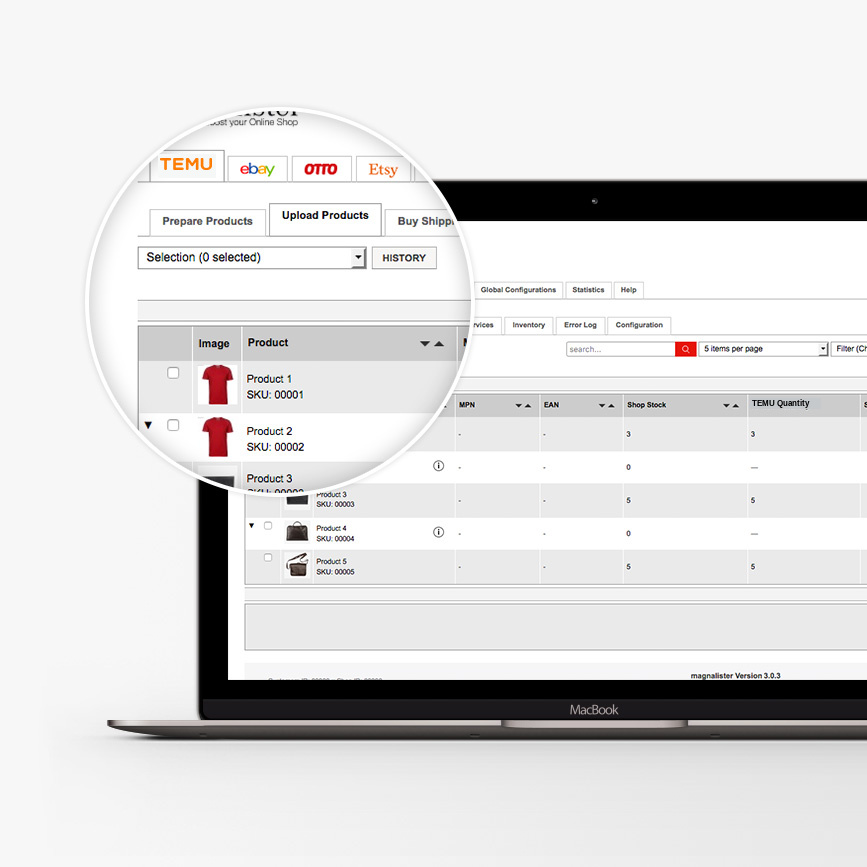
Unlike Amazon or Kaufland, Temu does not merge identical products into a shared product catalog. You therefore create and maintain an individual listing for each item. Complete product data makes correct categorization easier and gives buyers the information they need.
How to optimize your Temu listings
- Titles and keywords: Use precise, search-relevant product titles and naturally integrate the most important search terms, including specific properties (e.g., “foldable” or “waterproof”), into your title and description.
- Product features: Present functions, dimensions, material and scope of delivery in a clear, scannable way, for example as structured bullet points.
- Product images: High-resolution images against a neutral background increase the click-through rate. Show product details and proportions as well as at least one lifestyle shot.
- Completeness: Fill in all mandatory fields completely, including the shipping template with handling time. Add safety or certificate information to avoid automatic blocking. 5
- Maintain categories, attributes and variants: Assign each item to the appropriate Temu category and keep variants and attributes consistent. With magnalister, you transfer product data from your store system and adapt the mapping to the requirements of the sales channel.
Pro tip: Monitoring and A/B testing your Temu listings
An analysis of click-through and conversion rates shows how effectively titles, images and prices work with your target audience. Changes should be made in isolation – for example, first the title, then the main image – so that you can clearly attribute the results. Give each test enough time for evaluation and adopt the better variant before optimizing the next element.
What are the most common product listing mistakes on Temu?
- Copying content unchanged: Adapt listings from Amazon, eBay or Kaufland specifically to Temu’s categories, attributes and mandatory fields.
- Omitting mandatory information: Pay particular attention to the shipping template, handling time and required safety and certificate information.
- Maintaining variants inconsistently: Align names, images and attributes across all versions of a product.
3. Balance margin and competitiveness
How does pricing work on Temu?
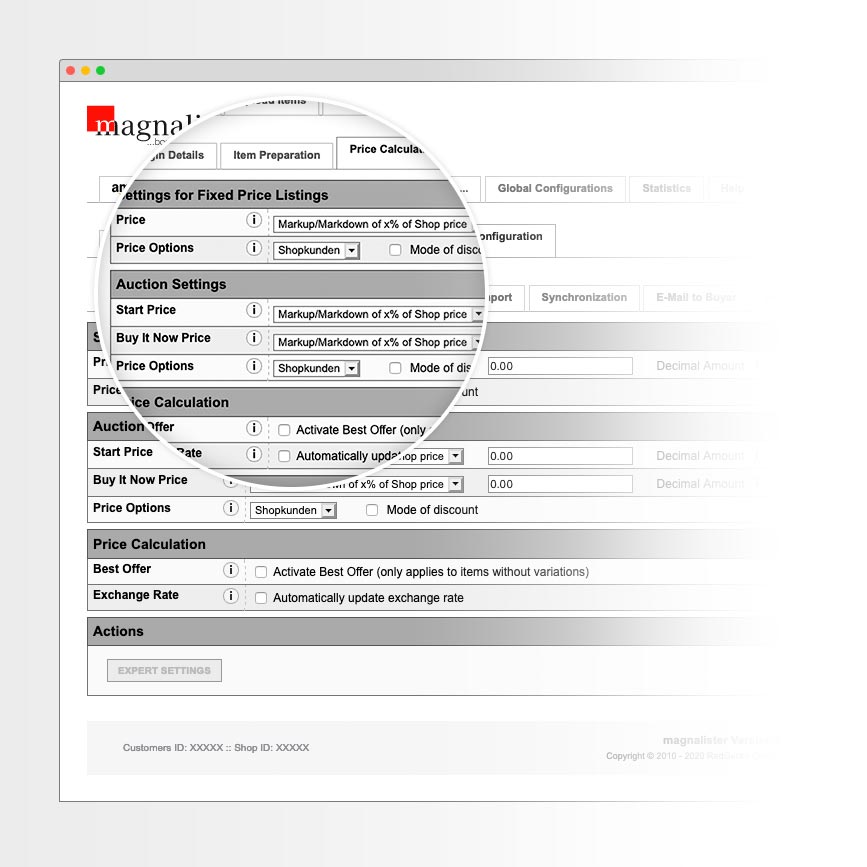
Pricing depends on the business model: in the fully-managed model, Temu controls the price for end customers. In the Local Seller Program, merchants enter the base price (Seller Base Price) as their desired revenue and can also specify a non-binding Recommended Retail Price. Temu determines the actual end-customer price (Retail Price). The difference between the end-customer price and the base price contains Temu’s margin or service share 5.
The following table shows the key differences between the two models:
| Aspect | Fully managed | Local Seller Program |
|---|---|---|
| Pricing | Temu controls the end-customer price | Merchants enter the base price and, optionally, a recommended retail price; Temu determines the end-customer price |
| Shipping | Temu, direct shipping from China | Merchant, from an EU warehouse |
| Warehouse | China | Germany/EU |
| Delivery time | Typically 5–14 business days | A few business days |
| Target sellers | Mainly sellers from China | Merchants based in the EU with an EU warehouse |
How to calculate your Temu prices
- Record variable costs: Take into account procurement, packaging, shipping, returns and, if applicable, advertising.
- Set a contribution margin: Plan for an amount that covers your overhead costs and then allows for profit.
- Determine the base price: Add up the variable costs and the desired contribution margin.
- Understand Temu’s share correctly: Temu’s platform share is already included in the difference between the base price and the end-customer price. Don’t deduct it from the base price again.
- Check other deductions: Only factor in fees or adjustments that are actually shown separately in your contract and settlement data.
- Mind price thresholds: Consider common price points, such as €19.99 instead of €20.00, without falling below your profitability threshold.
What are the most common pricing mistakes on Temu?
- Recording costs incompletely: In addition to procurement and shipping, include returns, advertising and any additional costs that are actually itemized.
- Confusing the base price with the end-customer price: Base your calculation on the base price. Temu’s share of the end-customer price must not be deducted from it again.
- Simply following the competition: Don’t lower your base price below the profitability threshold you have set.
4. Use shipping and fulfillment as a conversion lever
Why does on-time delivery matter on Temu?
On-time delivery has a positive effect on customer reviews, repurchase rate and visibility on Temu. In the local-to-local model, the platform evaluates delivery to the customer, not just the timely handover to the shipping carrier. Plan your handling and transit times so that you meet the stated delivery window even when order volumes rise.
Did you know? In February 2026, Temu’s Local Seller Program won a Gold Stevie Award (Sales & Customer Service). The judges noted that the program has streamlined the supply chain so that customers get their products faster at reduced prices, and that it helps small and mid-sized businesses stay in business or expand 6.
How to optimize shipping and fulfillment for Temu
- Set a realistic handling time: Base it on your actual processes and take weekends and seasonal peaks into account.
- Assign shipping carriers correctly: Use the exact carrier name from the Temu Seller Center. Deviating information can impair shipment tracking.
- Submit tracking data promptly: Enter the tracking number immediately after shipping. An integration can automate the transfer and prevent matching errors.
- Synchronize inventory: Continuously reconcile your stock levels with your store system. magnalister automates inventory synchronization, order import and the transfer of shipping data.
- Organize returns: Simplify return workflows, define clear return addresses and factor return costs into your price.
What are the most common shipping and fulfillment mistakes on Temu?
- Setting handling times too short: Don’t promise delivery times that you can’t meet during order peaks.
- Incorrect shipping data: Only use listed carrier names and submit the correct tracking number without delay.
- Unsynchronized inventory: Avoid orders for items that are no longer available or cannot be ready to ship in time.
5. Get compliance right from the start
Which compliance obligations apply to Temu sellers?
Temu sellers must meet the tax, product law and environmental requirements that apply to their product and the respective country of sale. Depending on the assortment, these include VAT registration, packaging obligations, product safety and WEEE (waste electrical and electronic equipment), among others.
Temu’s designation as a Very Large Online Platform (VLOP) under the Digital Services Act (DSA) primarily expands the platform’s own duties to review and act against illegal and unsafe offers. It does not generally replace or extend merchants’ legal obligations. 7
The most important areas at a glance:
| Requirement | What do merchants need to do? | Applies to |
|---|---|---|
| VAT ID (USt-IdNr.) | Provide valid tax data and required registrations | Business sellers 8 |
| LUCID Packaging Register | Register, complete system participation and report packaging volumes | Packaged goods for German end consumers 9 |
| GPSR | State the manufacturer, responsible person, product identification and warnings | Consumer products within the scope of the GPSR 10 |
| WEEE | Register for each brand and type of equipment and state the WEEE number | Electrical and electronic equipment 11 |
| CE marking | Meet conformity requirements and keep the required documentation available | Toys and certain electrical products, among others 12 |
You can find more information on the legal framework for selling on Temu in our article “Legal Requirements for Selling on Temu”, practical checklist included.
How do you set up Temu compliance properly?
- Check completeness: Verify all registrations required for your assortment, such as your VAT ID, LUCID and WEEE.
- Upload documents: Provide the required conformity, safety and product documentation for each affected item.
- Store records centrally: Keep all compliance documents at hand for inspections by authorities and platform reviews.
- Train your staff: Make sure the responsible employees know the applicable labeling and product safety requirements.
- Monitor changes: Regularly check for new legal requirements and updated specifications in the Temu Seller Center.
What are the most common compliance mistakes on Temu?
- Treating obligations as one-size-fits-all: Check the requirements for each product category and each country of sale individually.
- Leaving registrations incomplete: For packaging, LUCID registration alone is not enough; system participation and data reporting may also be required.
- Neglecting product information and documentation: Missing manufacturer, safety or registration data can prevent approval or lead to the listing being blocked.
6. Actively manage and optimize performance KPIs
Why do performance KPIs matter on Temu?
Performance KPIs show Temu how reliably a merchant processes orders. Late deliveries, cancellations, returns and poor reviews can reduce visibility and trigger restrictive measures by the platform. Good store performance, on the other hand, can enable earlier payouts. 5
How does Temu evaluate seller performance?
Temu evaluates store performance based on key order processing metrics. The core indicators include the cancellation rate as well as the return and refund rate. Temu does not disclose the exact weighting. 5
How to manage your Temu KPIs
- Monitor KPIs: Check your metrics regularly in the Temu Seller Center and investigate negative trends early.
- Narrow down causes: Analyze anomalies by product, shipping carrier and time period. This shows you which items or processes are dragging down your metrics.
- Synchronize inventory: Continuously sync available stock with Temu. magnalister automates inventory synchronization and reduces cancellations caused by overselling.
- Adjust processes: Shorten handling times, switch shipping carriers if delays keep recurring, or revise listings that are prone to returns.
- Review your measures: After every change, check whether the affected metric actually improves and whether the improvement lasts.
What are the most common KPI management mistakes on Temu?
- Spotting negative trends too late: Don’t wait for the platform to react; investigate unusual developments early.
- Looking only at overall figures: Also analyze weak metrics at product and process level.
- Not tracking the impact of measures: Systematically compare KPI development before and after each adjustment, one change at a time.
7. Scale with a multichannel strategy without extra effort
Why does a multichannel strategy make sense for Temu sellers?
With multichannel selling, you sell simultaneously through your own online store and relevant marketplaces such as Temu, Amazon or eBay. This lets you tap into new target groups and reach many potential new customers. You also spread your revenue across several channels and reduce your dependence on individual platforms.
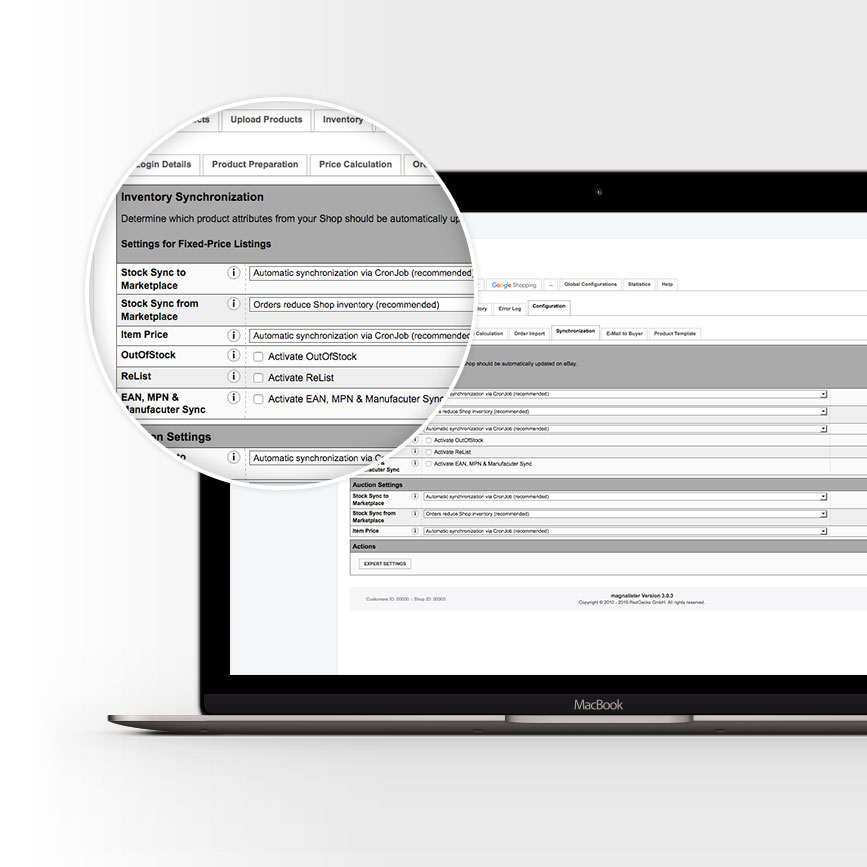
Established multichannel software such as magnalister supports you in putting this into practice: you install the plugin in your store system and manage Temu and other connected marketplaces centrally from the shop back end you already use.
What are the benefits of multichannel selling?
- Channel diversification: Effective risk spreading through independence from individual platforms and sales channels.
- Inventory synchronization: Reliably prevents overselling and minimizes cancellations thanks to accurate real-time data.
- Efficient scaling: Quick connection and convenient management of new marketplaces without significant extra effort.
- Central listing management: Efficient maintenance and global updates of all product catalogs directly from your familiar shop back end.
- KPI optimization: A consolidated data basis across all channels for faster, well-founded operational decisions.
How does magnalister automate selling on Temu?
magnalister connects Temu directly to Shopify, Shopware, WooCommerce, Adobe Commerce (Magento 2) or Gambio 13. With the plugin, you transfer product data, synchronize inventory, import orders and send shipping information from your shop back end to connected marketplaces such as Temu, Amazon, eBay and more.
With over 272 million listings and a processed order volume of more than €10 billion, magnalister has established itself as one of the market leaders in European multichannel commerce.
You can find more information about the Temu integration and the option to try magnalister free for 30 days here.
What are the most common multichannel mistakes on Temu?
- Managing inventory separately: As order volumes grow, manual updates quickly lead to overselling and cancellations.
- Transferring product data unchanged: Adapt categories, attributes and mandatory information to Temu’s requirements.
- Processing orders in separate places: Separate workflows increase the effort and the risk of late shipping notifications.
Conclusion: Use Temu strategically as an additional sales channel
Measured by gross merchandise volume (GMV), Temu was already one of the five largest online marketplaces in Germany in 2024 14. The platform therefore offers many merchants a relevant additional sales channel, but it is not equally suitable for every assortment.
In the Local Seller Program, merchants ship from European warehouses. Whether Temu pays off for your business depends above all on product selection, price calculation and shipping quality. Start with a limited assortment and only expand it once KPIs such as sales figures, returns and margin are convincing.
As part of a multichannel strategy, Temu can open up additional reach without increasing your dependence on a single marketplace. magnalister connects Temu directly to your online store and synchronizes product data, inventory, orders and shipping information.
Start selling on Temu with magnalister now
FAQ: Frequently asked questions about selling on Temu
How long does it take to register as a Temu seller?
Signing up takes just a few minutes, and your account is usually approved within a few business days. How long the review takes depends largely on how quickly and completely you submit your company documents and account details in the Seller Center.
Which products sell best on Temu?
Relevant categories include food, 3C electronics, small electrical appliances and toys. Whether an item is suitable for Temu depends on factors such as value for money, ability to deliver and return risk. Higher-priced products can also work if their added value is communicated clearly.
How does shipping work in the Temu Local Seller Program?
In the Local Seller Program, merchants ship from stock held in the EU and submit tracking information to Temu. What counts for performance is delivery to the customer, not just the handover to the shipping carrier. Choose a logistics partner supported in the Seller Center and transfer tracking data promptly 5.
Which KPIs does Temu use to evaluate sellers?
The core indicators named by Temu include the cancellation rate as well as the return and refund rate. Good store performance can enable earlier payouts. Specific weightings or thresholds are not publicly known 5.
Can I connect Temu to my existing online store?
Yes. Multichannel software such as magnalister connects Temu to store systems such as Shopify, Shopware, WooCommerce and Adobe Commerce (Magento 2). This lets you manage product data, inventory, orders and shipping information centrally in your shop back end.
How do I find the right price for my products on Temu?
In the Local Seller Program, you set the base price and can also specify a recommended retail price. Temu determines the actual end-customer price; its platform share is contained in the difference from the base price. So calculate with the base price minus your variable costs and any Temu deductions that are shown separately 5.
Which legal obligations do I have to meet as a merchant on Temu?
Temu merchants must meet the tax, product law and environmental requirements of the respective country of sale. Depending on the assortment, these include LUCID, WEEE and the requirements of the GPSR, among others. The Digital Services Act (DSA) also obliges Temu to verify merchant data and request the required product information 7, 8, 9, 10, 11, 12.
- 1 Temu (Whaleco Technology Limited). (2026). Transparency Center: DSA Transparency Reports, including the H2 2025 report with figures on average monthly active users in the EU and Germany. accessed October 7, 2026. https://www.temu.com/transparency-center-reports.html ↩︎
- 2 German Retail Federation (Handelsverband Deutschland, HDE). (2026). HDE Online-Monitor 2026: online retail in Germany in 2025, including a revenue estimate for Temu and Shein (in German). accessed October 7, 2026. https://einzelhandel.de/images/presse/Pressekonferenz/2026/onlinemonitor26/Online_Monitor_2026.pdf ↩︎
- 3 European Commission, Directorate-General for Taxation and Customs Union. (2026). Guidance and legal text on temporary flat fee on low-value imports which will apply until 1 July 2028. accessed October 7, 2026. https://taxation-customs.ec.europa.eu/news/guidance-and-legal-text-temporary-flat-fee-low-value-imports-which-will-apply-until-1-july-2028-2026-06-08_en ↩︎
- 4 Pfliegl, Konstantin / e-commerce magazin (WIN-Verlag). (2026). Boom von Temu & Co.: Chancen auch für europäische Händler. Interview (in German) with Thorben Bollmann of premiumXL. accessed October 7, 2026. https://www.e-commerce-magazin.de/interview-premiumxl-boom-temu-chancen-ecommerce-europa-a-b3c5f6dd81b29e2f7295c7ebb5023cb4/ ↩︎
- 5 Temu Seller Center – Official documentation in the EU seller area – Seller Base Price, Recommended Retail Price and Retail Price, plus information on listings, fulfillment, seller performance and payouts; partly accessible only after login – https://seller-eu.temu.com/ – n.d. (accessed October 7, 2026) ↩︎5.a, ↩︎5.b, ↩︎5.c, ↩︎5.d, ↩︎5.e, ↩︎5.f, ↩︎5.g
- 6 Stevie Awards for Sales & Customer Service / Temu. (2026). Temu Wins Gold Stevie® Award for Local Seller Program. Press release published on Retail Dive. accessed October 7, 2026. https://www.retaildive.com/press-release/20260205-temu-wins-gold-stevie-award-for-local-seller-program/ ↩︎
- 7 European Commission. (2024). Commission designates Temu as Very Large Online Platform under the Digital Services Act. accessed October 7, 2026. https://digital-strategy.ec.europa.eu/en/news/commission-designates-temu-very-large-online-platform-under-digital-services-act ↩︎7.a, ↩︎7.b
- 8 Federal Central Tax Office (BZSt). (2026). Assignment / Issue of the VAT number. accessed October 7, 2026. https://www.bzst.de/EN/Businesses/VAT/VAT_ID/Assignment/assignment_node.html ↩︎8.a, ↩︎8.b
- 9 Central Agency Packaging Register (ZSVR). (2026). How to register with the LUCID Packaging Register. accessed October 7, 2026. https://www.verpackungsregister.org/en/registration/find-out-about-registrations ↩︎9.a, ↩︎9.b
- 10 European Union. (2023). Regulation (EU) 2023/988 of the European Parliament and of the Council of 10 May 2023 on general product safety (GPSR), applicable since December 13, 2024. accessed October 7, 2026. https://eur-lex.europa.eu/eli/reg/2023/988/oj/eng ↩︎10.a, ↩︎10.b
- 11 Stiftung Elektro-Altgeräte Register (stiftung ear). (2026). Applying for WEEE-registration at stiftung ear. Registration of electrical and electronic equipment under the German Electrical and Electronic Equipment Act (ElektroG). accessed October 7, 2026. https://www.stiftung-ear.de/en/guides/applying-for-weee-registration/ ↩︎11.a, ↩︎11.b
- 12 European Union, Your Europe. (2026). CE marking – obtaining the certificate, EU requirements. Requirements and obligations for manufacturers and distributors. accessed October 7, 2026. https://europa.eu/youreurope/business/product-rules-compliance/general-product-compliance/ce-marking/index_en.htm ↩︎12.a, ↩︎12.b
- 13 RedGecko GmbH (magnalister): “magnalister – Easily Get Your Products Into Amazon, eBay and More”, supported shop systems and marketplaces as well as features for product upload, attribute matching, price and inventory synchronization, order import and order status synchronization, accessed October 7, 2026, https://www.magnalister.com/en/ ↩︎
- 14 ECDB / ecommerceDB in cooperation with EHI Retail Institute. (2025). Temu Entered Germany’s Top 5 Marketplace Ranking With Explosive Growth in 2024. Top marketplaces in Germany by gross merchandise volume (GMV); Temu among the top 5 in 2024. accessed October 7, 2026. https://ecdb.com/blog/temu-entered-germanys-top-5-marketplace-ranking/5145 ↩︎